
Why Daily Consistency Matters More Than Motivation
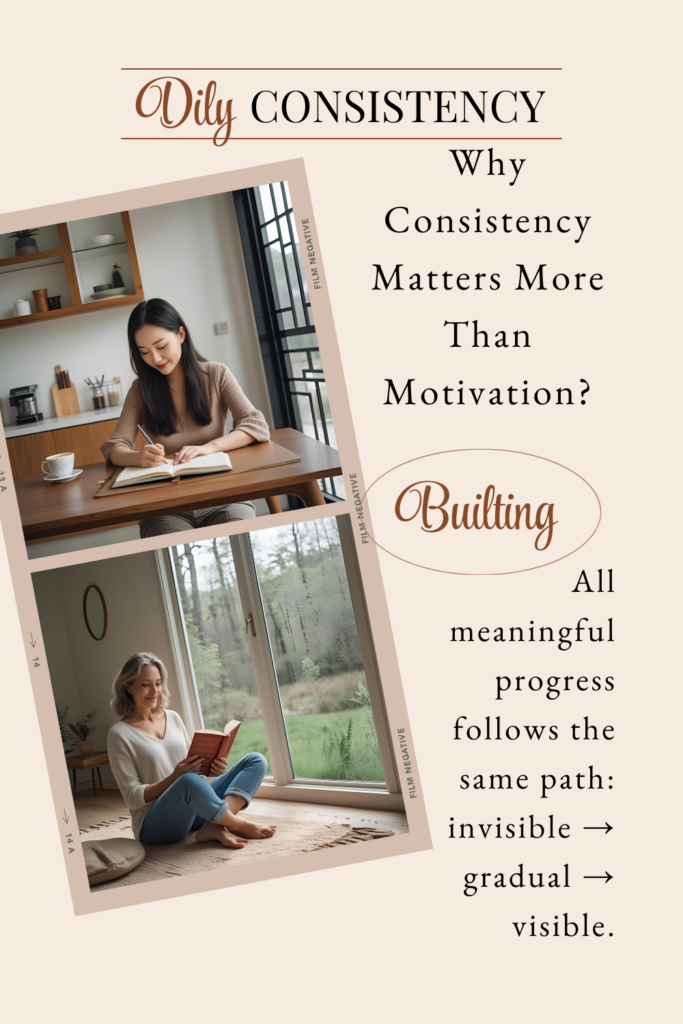
The path of growth
We often talk about motivation as if it’s the key to change. But
We wait for it.
We hope it shows up.
We tell ourselves that once we feel motivated, we’ll finally do the things we want to do.
But if motivation were enough, most of us would already be where we want to be.
The truth is this: motivation comes and goes. Some days it feels strong and energizing. Other days, it’s completely absent — especially when life feels full, repetitive, or overwhelming.
And that’s where many good intentions quietly fade.
What actually creates lasting change isn’t constant motivation.
It’s daily consistency.
The Problem With Relying on Motivation
Motivation is emotional.
It’s often tied to excitement, urgency, or inspiration.
That can be helpful at the beginning of something new — a new year, a new habit, a fresh start. But motivation alone isn’t designed to carry us through daily, ordinary days when we are on the path of growth.
Most of life doesn’t feel exciting or new.
It feels routine, and our thoughts are more comfortable with the knowing rather than the unknowing.
We still wake do our work.
Responsibilities don’t disappear.
Energy fluctuates.
When our growth depends on motivation, we unintentionally set ourselves up for disappointment. The moment motivation fades, we assume something is wrong with us — that we’re undisciplined, inconsistent, or lacking willpower.
But the problem isn’t us.
It’s the strategy.
Motivation is a spark.
Daily consistency is the key that keeps things going.
Daily Consistency: What It Actually Means
Daily consistency doesn’t mean doing everything perfectly or following a rigid routine.
It means:
- Showing up, even when energy is low
- Choosing small actions over dramatic ones
- Building routines that fit your real life, not an ideal version of it
Daily consistency has to feel sustainable.
It doesn’t rush.
It doesn’t punish.
Instead of asking, “what l I want to do this year?”
Asks, “What routine can I sustain realistically?”
This approach allows growth to feel supportive rather than exhausting.
A Personal Reflection on Daily Consistency
For a long time, I believed that daily consistency meant pushing myself harder.
If I missed a day, I felt guilty.
If I lost momentum, I assumed I wasn’t serious enough.
As a busy mom with a lot of responsibilities, I found it difficult to keep adding more to my plate. Eventually, I realized something important: the power of creating tiny habits.
I didn’t start by journaling for long periods. I used short prompts that took five minutes. That small practice slowly turned into a consistent habit.
Some seasons are better than others. And that’s okay.
Daily consistency leaves room for being human. Start over as many times as needed.
The Neuroscience Behind Consistency (A Reference)
Neuroscience research suggests that habits are formed through repetition, not intensity. Repeated small actions strengthen neural pathways in the brain, making behaviors feel more natural over time.
In contrast, relying on motivation — which is often linked to dopamine spikes — can create cycles of excitement followed by burnout. Calm, repeated actions help the brain associate habits with safety and predictability rather than stress.
This is one reason why gentle, consistent practices tend to last longer than extreme efforts.
Why Motivation Often Leads to Burnout
Motivation pushes us to do more, faster.
At first, this can feel empowering. But over time, it can lead to:
- Overcommitment
- Unrealistic expectations
- All-or-nothing thinking
When motivation fades — as it naturally does — we often stop entirely. Missed days turn into missed weeks. Guilt replaces motivation. The new habit is abandoned.
A calm daily consistency removes this pressure. because we only create what we can return daily
It allows for:
- Missed days without quitting
- Adjustments without shame
- Progress without perfection
Growth occurs with daily consistency.
My journey to Stay Consistent
Have you ever set a goal and, instead of feeling closer to progress, felt farther away from it?
Sometimes setting goals doesn’t feel like growth at all. In fact, it can feel discouraging. We decide it’s time to change, and in the first few weeks, we put in more effort than ever. We’re motivated. We’re committed. And then we look for results — but nothing obvious has changed.
I’ve lived this cycle many times.
When I first began my journey of personal growth, I would set goals and work toward them intensely in the beginning. Like many of us, I relied heavily on motivation. But over time, that motivation faded. I slowly put in less effort until eventually I stopped completely and forgot about the goal altogether.
For a long time, I thought this meant I didn’t put in enough effort.
Now I understand more about human behavior — and that understanding has changed everything.
I’ve learned how to stay consistent even when motivation isn’t there. And because of that, I’ve experienced more real success in my goals.
A common example is eating healthier or trying to lose weight. Many people set this goal, but not everyone succeeds. Why? Because it requires daily consistency long after motivation disappears. Personally, I’ve improved my eating habits, but I still struggle to stay consistent with exercise. If I felt one day I don’t let it become days and weeks, I get back and with the time I am a lot betetr that one year ago. Some areas grow faster than others — and that’s part of being human.
One of the biggest reasons we feel discouraged is that most meaningful goals don’t show results right away. We don’t see progress, so we assume we’re failing. But in reality, what we’re building is the foundation amd in the beginning, it is invisible.
Daily Consistency built foundations.
I like to think of habits as seeds. At first, all we’re doing is watering the soil. The growth is happening underground — developing roots before anything appears above the surface. That process takes time. Patience isn’t optional; it’s part of the work.
Our minds naturally want comfort. They resist change and pull us back toward what feels easy and familiar. That’s why consistency feels uncomfortable at first. But if we keep going — gently and steadily — something begins to shift.
Progress is usually slow and quiet in the beginning. Our efforts compound over time. At first, the results are invisible. The line doesn’t seem to move. But breakthrough almost always comes after long stretches of steady, unseen effort.
This is the secret most people don’t talk about.
All meaningful progress follows the same path:
invisible → gradual → visible.
Many wisdom teachers compare personal growth to the bamboo tree. For years, nothing appears above the ground. But beneath the surface, strong roots are forming. When growth finally becomes visible, it happens quickly — because the foundation is already there. Take this example and apply it to your own journey. This sample inspired me when I didn’t see any visible result.
The next time you find yourself thinking, “This is taking too long,” remember this: every worthwhile change requires a process. The key is staying focused and consistent long enough for the roots to form.
Create Consistency in Everyday Life
Daily consistency doesn’t require a complete lifestyle overhaul.
It might look like:
- Writing one sentence instead of a full page
- Taking a short walk instead of an intense workout
- Practicing gratitude mentally instead of journaling every day
- Reading a few pages instead of finishing a chapter
These small actions may seem insignificant, but over time, compounded, they create a lifestyle you aim for.
And daily consistency is what carries us forward when motivation is gone.
Gratitude as a Daily Key to Success
Gratitude is one of the most effective tools for consistency because it grounds us in the good and positive.
Instead of focusing on what ous I need to achieve, gratitude reminds what we have now:
- We are already supporting
- Progress is already happening
- Small steps are still steps
A daily gratitude practice doesn’t need to be elaborate. It can be as simple as noticing one thing that felt steady or supportive during the day.
This practice trains the mind to recognize continuity rather than constantly seeking change.
If gratitude is one of your goal here is a starting point: get your free, ready to use Download your free copy

How to Build Calm Daily Consistency (Without Overwhelm)
If you want to build calm consistency into your life, here are a few gentle principles to guide you:
1. Start Smaller Than You Think You Should
If a habit feels easy, you’re doing it right. Ease creates return.
2. Attach Habits to Existing Routines
Consistency grows when habits fit naturally into your day.
3. Allow Imperfect Repetition
Missing a day doesn’t erase progress. Return without judgment.
4. Focus on Identity, Not Performance
You’re becoming someone who practices gratitude — not someone who does it perfectly.
Track your new habit easy Get our tracker, make it with gratefulness for you. Download your free copy.

When You Feel Discouraged
There will be days when consistency feels boring.
Days when progress feels invisible.
This doesn’t mean nothing is happening.
Much of growth happens quietly, beneath the surface. Just like gratitude, consistency often works invisibly — shaping our mindset, our nervous system, and our sense of self.
Trust the slow process is working inside.
Practice Constantly Check-In
This week, try this:
Once a day, ask yourself:
“What is one small thing I can return to every day?” Start with 5 or 10 minute routine can be before bed or before brish your teets.
Not what you want to start.
Not a perfect routine.
What new routine can you return to every day?
Let that be enough.
Closing Reflection
You don’t need endless motivation to grow.
You need rhythms that support you.
Practices that feel gentle.
Consistency that feels calm, not forced.
Growth isn’t built on intensity.
It’s built on returning — again and again — with grace and gratitude.
Visit our resources page to find more helpful tools
Visit our store for more about gratitude products.